Korean art and visual culture have followed a dynamic path, beginning with the traditional aesthetics of hanji paper and ink, moving through Nam June Paik’s video art and Dansaekhwa, and continuing into today’s K-culture and digital interactive art. It has moved far beyond the white cube of the museum, rapidly absorbing webtoons, broadcast imagery, K-pop visual art, generative AI, and media façades. By responding flexibly to social change and technological development, Korean art has translated its distinctive sense of spirituality into a modern visual language. By combining local narratives with themes that resonate globally, it has now established a distinctive position within both the international art market and popular culture.
A Map of Korean Visual Culture
The visual images we encounter every day did not appear out of nowhere. They are the result of distinctive approaches to space, emotion, and aesthetics that have developed over centuries and gradually merged with contemporary media. Art was once regarded as something refined that belonged in designated cultural spaces, but today it has become a living part of everyday experience.
From Traditional Aesthetics to Contemporary Visual Culture
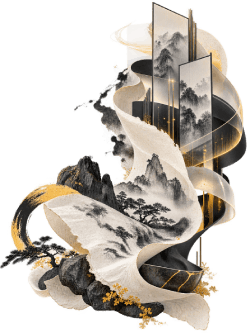
When looking at landscape paintings from the Joseon period or works created by traditional scholar-artists, one of the first things that stands out is the generous use of empty space rather than densely filling every part of the composition. The emphasis was often less on reproducing the exact shape of an object and more on respecting its energy, spirit, and the natural character of the materials themselves. This distinctive attitude has not disappeared in modern art.
- Natural Space and Breathing Room: Rather than forcing complete control over canvas or hanji, artists often allow paint and paper to interact naturally. This approach remains visible in contemporary painting and installation art.
- Processes That Accumulate Time: Repeatedly applying, scraping away, and rebuilding a surface in an almost meditative manner continues to influence the distinctive way many contemporary Korean artists approach materials.
- Harmony Between Light and Surface: The soft gradations created when ink spreads through traditional paper are reinterpreted today through flowing light, projection, and moving images in contemporary media art.
Rather than simply reproducing or preserving the past, Korean artists continue to carry traditional aesthetic attitudes into digital environments and contemporary forms of artistic expression.
The Fusion of Fine Art and Popular Visual Media
Today, the strict division between fine art and commercial art has become increasingly difficult to maintain. Visual experiments that were once confined to galleries and museums now appear in video content, album artwork, fashion editorials, and even mobile interfaces.
A quick look through cultural platforms that gather exhibitions and cultural events from across Korea also reveals a growing number of projects designed to break down the traditional boundary between art and the wider public.
- Expanding Exhibition Spaces: Instead of remaining inside quiet galleries, art now occupies converted factories in Seongsu-dong, city media walls, and entire multipurpose cultural complexes.
- Cross-Disciplinary Collaboration: It is no longer unusual for contemporary artists to direct visual artwork for popular musicians or create conceptual installations for brand pop-up stores.
- Experiential Exhibition Culture: Audiences are increasingly moving beyond simply standing in front of artworks. Interactive exhibitions allow visitors to walk directly into installations and experience light, sound, and space with their entire bodies.
Contemporary Korean visual culture therefore grows from deep traditional roots while constantly exchanging ideas with the speed, energy, and polished aesthetics of modern popular culture.
The Aesthetic Identity of Korean Contemporary Art
Korean contemporary art has gone far beyond simply imitating Western artistic movements. It has transformed Korea’s complex history and philosophical traditions into a distinctive visual language. Some works may initially feel unfamiliar when encountered in a museum, but looking more closely at the stories and questions behind them often reveals considerable emotional and intellectual depth.
Exploring Space and Materiality: The Global Rise of Dansaekhwa
Korean Dansaekhwa, which emerged prominently around the 1970s, differs considerably from minimalism that simply covers a canvas with a single color. Rather than treating the canvas as a passive surface for the artist’s expression, Dansaekhwa places great importance on the process through which paint, canvas, paper, and the artist’s body continuously interact.
- The Aesthetics of Repetition and Discipline: Works such as Park Seo-bo’s Ecriture series involve pushing and manipulating hanji or repeatedly drawing lines with a pencil, while artists such as Chung Sang-hwa repeatedly applied and removed paint thousands of times. The process can resemble a form of disciplined meditation.
- Creating Space Through Emptiness: Instead of depicting recognizable subjects, these artists often leave surfaces restrained and open, allowing viewers room to think, pause, and breathe.
- A Distinctive Position in the Global Art Market: Major works by leading Dansaekhwa artists have reached prices ranging from billions to tens of billions of won at major Korean and international auctions, establishing the movement as one of the defining symbols of Korean contemporary art.
Platforms such as Google Arts & Culture, which works with cultural institutions around the world, also make it possible to examine the textures and production methods of many works in high resolution.
A Visual Language of Its Time: Minjung Art and the Legacy of Critical Realism
While Dansaekhwa focused on quiet introspection and materiality, Minjung art, which emerged during the 1980s, brought the realities of Korean society and ordinary people’s lives directly into artistic practice. Against the background of military rule and rapid industrialization, artists increasingly argued that art should not ignore social inequality and political conflict.
- A Visual Language Confronting Reality: Beginning with groups such as Reality and Utterance, founded in 1980, artists depicted workers, farmers, urban residents, and aspirations for democratization through direct paintings, large-scale banners, and prints.
- Art Moving Into Streets and Public Squares: Works that had once been confined to museum walls began appearing in public squares, demonstrations, factories, and other shared spaces, creating a direct connection with wider audiences.
- Contemporary Reassessment and Expansion: Although Minjung art was sometimes marginalized because of its political associations, it is now widely studied as an important record of Korea’s turbulent modern history and is represented in national museums and international biennales.
The critical realism of Minjung art, with its direct engagement with social issues and everyday struggles, also continues to influence documentary photography, moving-image art, and socially engaged contemporary practice.
Nam June Paik and Technology Art: Pioneering Experiments in Media Aesthetics
No discussion of global art history and media art would be complete without Nam June Paik. Long before computers and the internet became part of everyday life, Paik was already using television monitors and electronic signals during the 1960s and 1970s to challenge conventional ideas about what art could be.
- Deconstructing and Reinventing Television: Paik treated television not as a device for passively receiving information, but as an interactive instrument that viewers could engage with and transform.
- Combining Technology With Humanity: By bringing Eastern Zen philosophy and playful creativity into contact with cold electronic machinery, Paik imagined technology and communication as forces that could connect people in new ways.
- A Monument Built From Screens: The More, the Better, an iconic installation at the National Museum of Modern and Contemporary Art in Gwacheon, consists of 1,003 monitors arranged into a monumental tower. Following extensive conservation and restoration work, its illuminated video displays have once again become active.
The experimental foundation established by Nam June Paik continues to influence younger Korean artists working with virtual reality, generative artificial intelligence, and other emerging technologies on the international media-art scene.
Popular Culture and the Expansion of Visual Text
As the boundary between fine art and everyday content has weakened, popular culture has become one of the most dynamic testing grounds for contemporary visual art. The images we encounter on smartphones and screens often contain carefully developed artistic concepts and highly distinctive visual sensibilities.
K-Pop Visual Direction and the New Visual Grammar of Concept Photography
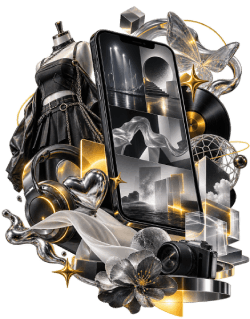
K-pop today is no longer simply a form of music. It has evolved into a comprehensive visual experience. Concept photographs and visual films released before an album launch often resemble carefully designed installation or conceptual art projects.
- Visual Mise-en-Scène With a Narrative: Surrealist painting, classical mythology, Y2K aesthetics, and other visual languages are frequently reinterpreted through a contemporary lens to construct distinctive fictional worlds.
- Turning Objects and Fashion Into Art: Clothing becomes more than costume, while sculptural forms and unusual objects are used to express an artist’s identity and add depth to the visual composition.
- Active Interaction With Audiences: Fans do not simply look at promotional images. They interpret hidden symbols, visual references, and iconographic clues, creating their own discussions around the imagery.
This highly developed approach to visual direction has also influenced international fashion and design, becoming an important part of contemporary global visual trends.
The Center of Digital Storytelling: K-Webtoons and the Aesthetics of Vertical Scrolling
Unlike traditional printed comics in which readers turn physical pages, the vertical scrolling format developed for digital webtoons has become one of the most distinctive visual conventions associated with Korean digital culture. Designed around smartphone interfaces, it fundamentally changes the way time, pacing, and space are presented.
- Movement Created Through Scrolling: The movement of a finger can increase tension, reveal information gradually, or control the passage of time in a way similar to camera movement in film.
- Breaking and Expanding the Frame: Panels no longer need to remain within rigid rectangular boxes. Images can flow through open space, producing a visual rhythm that sometimes resembles the panoramic movement of traditional scroll paintings.
- A Visual Format That Became a Global Standard: Distinctive panel arrangements, pacing techniques, and rich digital coloring methods have now become common features across digital comic platforms worldwide.
Webtoons have therefore created more than a new form of comic. They have introduced a different rhythm for consuming images and experiencing stories within digital space.
Technology and the Future of Contemporary Visual Art
The growing relationship between art and advanced technology has lowered barriers to artistic experiences and brought visual culture further into everyday life. Pixels, data, sensors, and algorithms are now becoming creative materials alongside more traditional tools such as brushes and paint.
Immersive Media Art and the Transformation of Public Exhibition Spaces
Immersive media installations that cover entire exhibition walls or enormous urban screens have transformed how audiences experience visual art. Public cultural platforms that provide information about events and exhibitions across Korea regularly feature large-scale digital exhibitions taking place throughout the country.
- An Overwhelming Sense of Scale: In spaces surrounded by projected imagery, audiences no longer observe artworks only from a distance. Instead, they can physically enter the environment and experience the work from within.
- Public Media Façades Across the City: Places such as the large screens at COEX in Samseong-dong and the exterior of Dongdaemun Design Plaza have helped transform ordinary urban environments into open-air galleries.
- Communication Between Cities and Citizens: People simply passing through public spaces can unexpectedly encounter advanced media art, finding moments of visual stimulation or rest within everyday city life.
Art is therefore no longer limited to solemn institutional spaces. It increasingly becomes part of the streets, architecture, and urban environments people experience every day.
Artificial Intelligence, Virtual Reality, Digital Archives, and the Expansion of Art
Artificial intelligence, virtual reality, and advanced digital restoration technologies are dramatically expanding the possibilities of both artistic creation and cultural preservation. Historical objects can be recreated in high resolution, while artists are producing new forms of work through direct interaction with algorithms. Cultural platforms that provide access to historical records and cultural datasets also increasingly feature the results of these technology-based projects.
- Algorithms as Creative Partners: Artists increasingly use artificial intelligence not merely as a technical tool, but as a creative partner capable of expanding ideas and generating unexpected visual possibilities.
- Virtual Exhibitions Beyond Time and Place: Visitors can examine cultural objects and three-dimensional installations in virtual environments without physically traveling to museums.
- Long-Term Digital Preservation: Traditional paintings and multimedia artworks that may deteriorate over time can be recorded as detailed digital data, allowing future generations to access their original visual forms.
The meeting of cultural heritage and emerging technology is therefore strengthening the continuing cycle between the past, the present, and future artistic inspiration.
The Current Position of the Korean Art Market as a Hub for Asian Contemporary Art
The Korean art market has grown into an increasingly important international center following the successful joint presentation of Frieze Seoul and Kiaf, one of Korea’s leading art fairs. Major art publications and other media outlets have increasingly described Seoul as an important meeting point for artistic discussion, cultural institutions, collectors, and capital within Asia.
- Major International Galleries Establishing a Presence in Seoul: Leading global galleries such as Pace, Thaddaeus Ropac, and White Cube have opened spaces in Seoul and continue to present international programs in the city.
- Strong Interest From Korean and International Collectors: During major art fairs, works by established international artists can trade for billions of won, while works by prominent Korean artists and emerging names may sell for tens or hundreds of millions of won.
- A Platform for Artistic Discussion: These events are more than commercial marketplaces. Leading figures, curators, galleries, and specialists from the international art world gather in Seoul to discuss the current state and future direction of Asian art.
With a strong domestic collector base, an active popular-culture infrastructure, and a growing network of respected museums and galleries, Korea has become an increasingly important center for contemporary art in Asia.